Supplements for Masters Athletes: What Is Worth Taking After 35
More on: Supplement Buyer's Guides · Collagen Guides · Creatine Guides
TL;DR: The supplements for masters athletes worth taking are a short list, added one at a time: a prebiotic fibre for your gut, enough protein at every meal, creatine monohydrate alongside strength work, and a daily collagen or joint formula for the connective tissue you load. Food, sleep and training come first. Add one product every two to four weeks so you know what each one is doing.
You still race. You still train five or six days a week.
But the recovery that took a day at 28 now takes three.
So you go looking for help, and the shelf hands you forty options.
Here is the short list, in the order I would add it.
Who counts as a masters athlete?
Masters age groups usually start at 30 or 35, depending on the sport, and run in five-year bands from there.
If you train with purpose and compete against people your own age, you are one.
Research on masters endurance athletes by Tanaka and Seals found performance declines only modestly until around 60 to 70 in people who keep training. The engine lasts. What needs more care is recovery, muscle and connective tissue.
Your action: stop thinking of supplements as a shortcut. Think of them as support for the things that change with age.
Supplements for older athletes: the order matters
If you try to do everything at once, you do nothing for nothing.
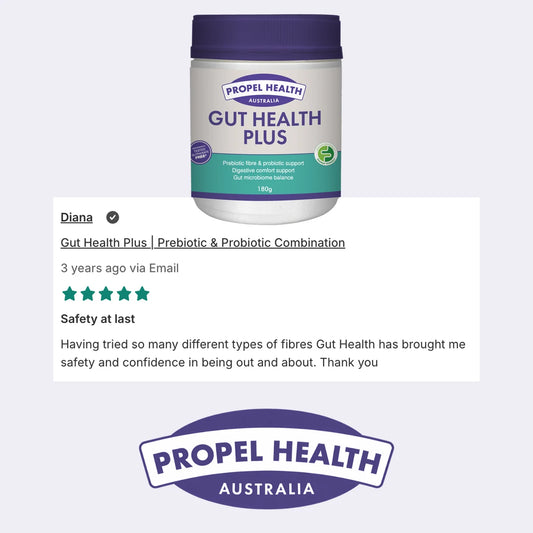
- Gut first. Every meal and every supplement has to get through it.
- Protein. Older muscle needs a bigger dose per meal.
- Creatine. The most researched supplement in sport, and well studied in older adults.
- Collagen and joint support. For the tendons, ligaments and cartilage you load every week.
Your action: pick step one today. Give it two weeks before adding step two.
1. Gut first: a prebiotic fibre
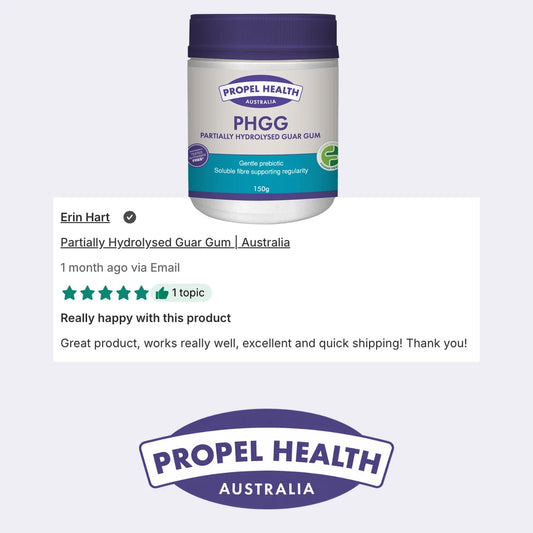
Our partially hydrolysed guar gum (PHGG) is an unflavoured prebiotic fibre that dissolves clear in water. The label suggests starting at 5 g a day and building to 6 g.
Your action: take it in the evening, away from key sessions.
2. Protein for masters athletes
Older muscle needs about 0.4 g of protein per kilogram of body weight at a meal, compared with about 0.24 g for younger adults. For a 75 kg athlete, that is roughly 30 g per meal. The detail is in protein for older athletes.
Your action: check whether your breakfast has 30 g of protein in it.
3. Creatine for athletes over 40
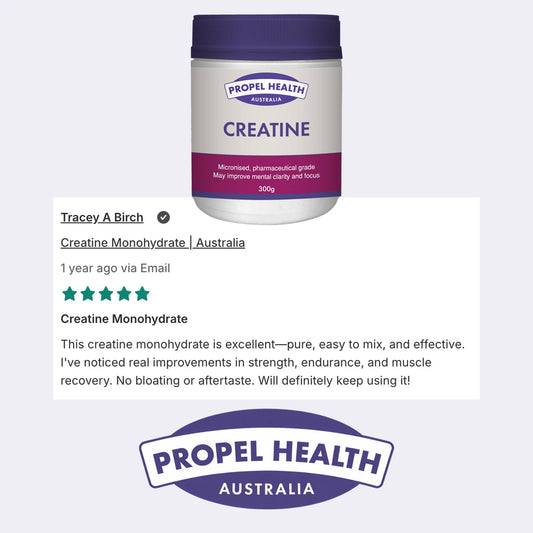
3 to 5 g of creatine monohydrate a day, every day, no loading. It does its best work alongside two strength sessions a week. Dose, water weight and timing are covered in creatine for older athletes.
Your action: only start once your strength sessions are in the calendar.
4. Collagen and joint support
Connective tissue adapts slower than muscle, which is why it is often what stops older athletes, not fitness.
You have two routes: plain collagen peptides, covered in collagen for athletes, or a formula with collagen, glucosamine, chondroitin and MSM together, covered in joint supplements for athletes.
Ours is a joint formula for masters athletes: all four in one 5 g scoop. Complete Joint Care is a comprehensive blend of collagen peptides, minerals and traditionally used botanicals formulated to support joint mobility, flexibility and connective tissue health.
Your action: choose one route and take it daily for 8 to 12 weeks before you judge it.
Best supplements for athletes over 50
The list does not change after 50. The emphasis does. Protein per meal and strength work become non-negotiable, and creatine has the strongest research in exactly this age group.
Your action: if you only do one thing over 50, hit 30 g of protein at three meals.
Sport-specific guides
- Grapplers: BJJ after 40
- Triathletes: triathlon over 40
If you are on medication, carrying an injury or have a medical condition, speak with your healthcare provider before starting any new supplement.
Grant Jenkins is an ESSA Accredited Exercise Physiologist and high-performance athletic development coach with almost 30 years of coaching behind him, including national academy and professional athletes. He is a co-founder of Propel Health Australia.
References
- Tanaka H, Seals DR. Endurance exercise performance in Masters athletes: age-associated changes and underlying physiological mechanisms. J Physiol. 2008;586(1):55-63.
- Moore DR, Churchward-Venne TA, Witard O, et al. J Gerontol A Biol Sci Med Sci. 2015;70(1):57-62.
- Kreider RB, Kalman DS, Antonio J, et al. J Int Soc Sports Nutr. 2017;14:18.