Natural Sports Supplements for Performance and Recovery: The Complete Guide
The sports supplement industry generates billions of dollars globally, and a significant portion of that revenue is built on hype rather than evidence.
Proprietary blends that hide ingredient doses, stimulant-heavy pre-workouts that crash as fast as they kick in, and recovery products that are largely flavoured protein with a few token micronutrients.
The noise makes it genuinely difficult to identify what actually works.
This guide focuses exclusively on natural sports supplements with meaningful research behind them.
Ingredients that have been tested in peer-reviewed trials, that work with your body's physiology rather than overriding it, and that are safe for long-term daily use.
Whether you are an elite athlete, a weekend warrior, or someone who simply wants to support an active lifestyle, this is where to start.
Why Natural Sports Supplements Deserve More Attention
Many people are looking for natural ways to support energy and mental performance without depending on high-stimulant products.
Our collection of the best natural health products for energy and focus in Australia includes clinically researched ingredients that support healthy energy production, circulation, brain function and overall wellbeing.
Natural does not mean ineffective.
Some of the most compelling performance research of the past decade has been conducted on plant-derived and whole-food compounds.
Beetroot, moringa, creatine (naturally found in red meat and fish), collagen, and vitamin C have all been the subject of well-designed clinical trials demonstrating meaningful performance and recovery benefits.
Buy Moringa Leaf Powder direct from Propel Health. Certified organic and independently tested.
Natural sports supplements also tend to have significantly better long-term safety profiles than synthetic stimulants and hormonal compounds.
For recreational athletes and active Australians who want to support performance for decades, not just the next training block, this matters enormously.
Pre-Workout Natural Supplements
Beetroot Powder for Endurance
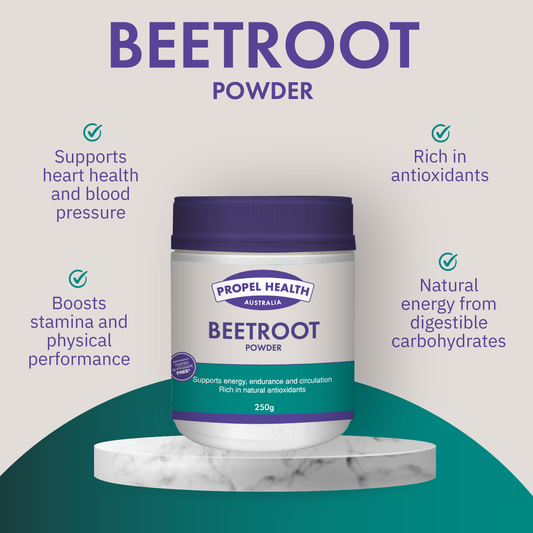
Beetroot powder is arguably the most evidence-supported natural performance supplement available to athletes. Its effect on endurance performance is well established across dozens of peer-reviewed studies involving runners, cyclists, swimmers, and team sport athletes.
The mechanism is well understood: beetroot is exceptionally rich in dietary nitrates, which the body converts to nitric oxide via a saliva-mediated reduction pathway.
Nitric oxide is a potent vasodilator. It relaxes and widens blood vessels, improving oxygen delivery to working muscles.
Studies have consistently demonstrated that athletes supplementing with dietary nitrates from beetroot can do the same amount of work while consuming measurably less oxygen.
This reduction in the oxygen cost of exercise is particularly valuable in endurance sports where oxygen efficiency is a primary performance determinant.
Propel Health's Beetroot Powder for Athletes is a pure, single-ingredient, minimally processed option that makes hitting effective doses straightforward.
For a dedicated deep-dive into the research, see our full guide to beetroot powder for athletes.
Creatine for High-Intensity Performance
Creatine is one of the most extensively studied compounds in the history of sports nutrition.
More than five hundred peer-reviewed studies have examined its safety, dosing, and performance effects. The conclusion is consistent: creatine supplementation improves performance in high-intensity, short-duration efforts like sprinting, heavy lifting, court sports, and team sports involving repeated powerful actions.
The mechanism involves increasing the availability of phosphocreatine in muscle cells, which fuels the ATP-PC energy system used in efforts lasting one to fifteen seconds.
By increasing the pool of phosphocreatine available for rapid resynthesis, creatine supplementation allows athletes to produce more work before fatiguing and recover more quickly between intense efforts.
Emerging research also demonstrates cognitive benefits from creatine supplementation, particularly for mental performance under fatigue and in situations of sleep deprivation.
It is one of the few supplements that genuinely delivers in both athletic and cognitive performancedomains.
Recovery Supplements with Real Evidence
Collagen for Connective Tissue maintenance
Joint injuries, tendon problems, and connective tissue damage are among the most common performance limiters in both elite and recreational sport.
Unlike muscle, which heals relatively quickly and responds well to protein intake, tendons and ligaments have poor blood supply and slow repair rates.
Collagen supplementation has emerged as a targeted intervention for connective tissue recovery.
Studies led by researchers at Australian Catholic University demonstrated that taking hydrolysed collagen peptides with vitamin C one hour before exercise increased the collagen content of circulating amino acids and stimulated significantly greater collagen synthesis in tendon and ligament tissue compared to placebo.
The implication is that collagen supplements, taken strategically before loading, support the ongoing repair and strengthening of the connective tissues and joints that bear load during athletic activity.
The latest research also suggests that short term loading (4 weeks) of a collagen protein powder can help female runners.
Propel Health's Collagen Beauty Boost with Hyaluronic Acid provides hydrolysed collagen peptides alongside hyaluronic acid, supporting both structural repair and joint lubrication.
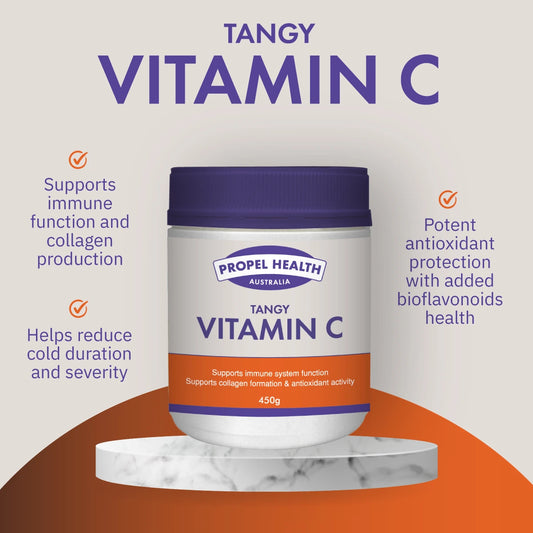
Paired with Propel Health's Tangy Vitamin C with Hesperidin and Zinc, this is a well-supported combination for connective tissue health.
Vitamin C as an Exercise Recovery Vitamin
Exercise generates significant oxidative stress. Mitochondria working at high capacity during intense aerobic effort produce free radicals as a byproduct of energy metabolism.
The body has its own antioxidant defence systems, but these are easily overwhelmed during heavy training loads.
Vitamin C is one of the body's primary water-soluble antioxidants and plays a direct role in neutralising exercise-induced free radicals.
Vitamin C also supports collagen synthesis, iron absorption (critical for oxygen transport), immune function (which is transiently suppressed after intense exercise), and adrenal hormone production (relevant for recovery during periods of high training stress).
Daily vitamin C supplementation for athletes is broadly supported and has a strong safety profile even at higher intake levels.
Moringa for Micronutrient Recovery
Hard training dramatically increases the body's demand for micronutrients. Iron, potassium, calcium, B vitamins, vitamin C, and magnesium are all depleted faster during heavy training loads.
Many athletes focus on protein and carbohydrate recovery while completely neglecting micronutrient repletion, which can create progressive deficiencies that impair performance over weeks and months.
Propel Health's Organic Moringa Powder is one of the most micronutrient-dense supplements available. It provides meaningful amounts of iron, calcium, potassium, and vitamin C in natural, bioavailable forms.
Adding a scoop to a post-workout recovery smoothie is a practical way to address the micronutrient debt that accumulates with consistent training without taking a fistful of individual vitamin supplements.
Gut Health: The Often-Ignored Performance Factor
Elite sports science is increasingly paying attention to the gut microbiome as a performance variable. The gastrointestinal system is responsible for absorbing all nutrients that fuel training and recovery.
Athletes with gut dysbiosis or increased intestinal permeability (leaky gut) have impaired nutrient absorption, increased systemic inflammation, and often experience gastrointestinal distress during competition that directly affects performance.
Research published in Nature Medicine identified distinct microbiome signatures in elite endurance athletes, including higher populations of bacteria that produce propionate (a short-chain fatty acid that supports energy metabolism) compared to sedentary controls.
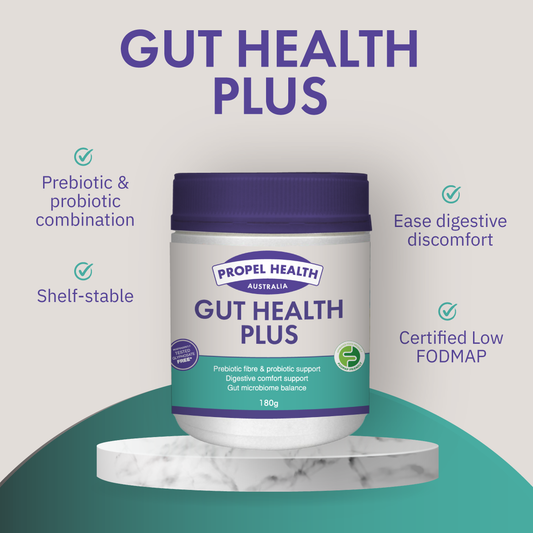
Supporting gut microbiome health with a daily prebiotic supplement like PHGG Powder is therefore not just a digestive health strategy but a legitimate performance support strategy.
Athletes who neglect gut health are leaving performance on the table. Nutrient absorption efficiency, recovery quality and systemic inflammation are all influenced by the health of the gut microbiome.
Vitamins and Minerals for Active Australians
Magnesium for Muscle Function
Magnesium is involved in muscle contraction and relaxation, ATP energy production, protein synthesis, and electrolyte balance. It is one of the most commonly depleted minerals in athletes due to its loss through sweat and its increased utilisation during intense training.
Deficiency contributes to muscle cramps, increased injury risk, poor recovery, and impaired sleep quality, which is the primary driver of physical adaptation.
Iron for Oxygen Transport
Iron is the central component of haemoglobin, the protein in red blood cells that carries oxygen to working muscles. Iron deficiency, even at subclinical levels before full anaemia develops, reduces VO2 max, impairs endurance performance, and increases perceived exertion at any given work rate.
Female athletes are particularly vulnerable due to menstrual blood loss.
Regular blood testing to monitor ferritin levels is advisable for any serious endurance athlete.
Vitamin D for Athletic Performance
Vitamin D deficiency is associated with impaired muscle function, reduced strength output, increased injury risk, poor immune function (relevant for avoiding training disruptions), and slower recovery from muscle damage.
Numerous studies have found meaningful proportions of professional athletes in team sports to be vitamin D deficient, particularly during winter months in higher latitudes.
Daily supplementation during periods of reduced sun exposure is widely recommended.
What to Look for When Buying Sports Supplements
- Informed Sport or HASTA certification if competing in regulated sport: These certifications test for banned substances and give athletes confidence that products are contamination-free.
- Transparent labelling: Full disclosure of every ingredient and its dose. No proprietaryblends.
- Meaningful active ingredient doses: Effective doses of beetroot nitrates, creatine, collagen, and vitamins are well established in the literature. Products containing token doses included purely for label appeal provide no benefit.
- Third-party testing for heavy metals and agricultural contaminants: Particularly important for plant-derived supplements.
- Clean ingredient lists: Artificial colours, sweeteners, and preservatives are unnecessary in sports supplements and compromise the clean nutrition approach that most serious athletes pursue.
Building a Natural Sports Supplement Stack
A practical, evidence-based daily supplement stack for most active Australians:
- Beetroot powder (60 to 90 minutes pre-workout for endurance sessions)
- Creatine monohydrate (daily, timing is less critical than consistency — 3 to 5 grams)
- Collagen peptides + vitamin C (morning, particularly on strength training days)
- Moringa powder (post-workout recovery smoothie for micronutrient repletion)
- Prebiotic gut health supplement (daily with breakfast for microbiome and absorption support)
- Magnesium glycinate (evening for sleep quality and overnight recovery)
This stack addresses performance, recovery, connective tissue health, micronutrient repletion, gut health, and sleep quality, the six most impactful variables in long-term athletic performance.
For more on specific supplements in this stack, see our guides on beetroot powder for athletes and the best daily wellness supplements for Australians.
About the Author
Grant Jenkins is the founder of Propel Health Australia and a high-performance coach & physiologist with over 25 years’ experience working with elite and developing athletes. He has formulated nutritional supplements used by athletes, families and health professionals across Australia. Grant combines real-world coaching experience with evidence-based research to bridge the gap between performance science and practical health.
Disclaimer
Propel Health offers this article for education purposes only. Please consult your Health Practitioner for personalised and specific information.