Natural Alternatives to Ozempic: What Fibre and Protein Can Do
More on: Gut Health Guides
TL;DR: Natural alternatives to Ozempic do not do what a prescription medicine does. What food can do is help you feel full after a meal: soluble fibre (psyllium husk, PHGG or inulin) and protein at every meal. Start with one fibre serve a day and a protein-rich breakfast, and talk to your doctor before changing any prescribed medicine.
Search social media for "nature's Ozempic" and the list grows every month.
Berberine. Psyllium husk. Apple cider vinegar. Green tea.
Each one is sold as the thing that does what a weekly injection does.
So which one works?
None of them works like the medicine. That is the honest answer.
But two things on that list do have real research behind them for feeling full after a meal: fibre and protein.
Is there a natural alternative to Ozempic?
Ozempic is the brand name for semaglutide, a prescription-only medicine.
It copies GLP-1, a messenger your gut releases after you eat. GLP-1 is one of the signals that tells your brain you have had enough.
The medicine keeps that signal running at a level no meal reaches, for a full week from one dose.
No food, powder or tea does that.
Anything sold as "nature's Ozempic" is borrowing the name, not the effect.
Your action: if you have been prescribed it, keep every decision about it with your doctor.
What food can do for fullness
Your gut makes its own GLP-1 every time you eat.
Two parts of a meal have the most research behind the fullness that follows.
- Soluble fibre. Some fibres are fermented by gut bacteria. In a 2009 study in the American Journal of Clinical Nutrition, Cani and colleagues gave healthy adults 16 g a day of inulin-type fibre for two weeks. Their own GLP-1 rose after meals and they reported feeling fuller. Other fibres, like psyllium, thicken in water and slow how fast a meal leaves the stomach.
- Protein. Gram for gram, protein is the most filling of the three macronutrients.
These are small, everyday effects. They help a person feel satisfied sooner; they do not replace a medicine.
Your action: look at your last three meals. How much fibre and protein was on the plate?
Protein leverage: why protein comes first
There is a second reason protein matters.
The protein leverage hypothesis, proposed by Professors Stephen Simpson and David Raubenheimer in 2005, suggests people keep eating until they reach their protein need.
When meals are low in protein, the total amount eaten goes up.
A cereal and juice breakfast leaves that need unmet. Eggs or a whey shake meets it early.
The full explanation, with a real coaching example, is in What Is the Protein Leverage Hypothesis?
Your action: build breakfast around 25 to 30 g of protein.
Four foods to build a day around
1. Psyllium husk: the one people already know

Psyllium is the fibre in many of the "nature's Ozempic" posts, and The Guardian has covered the trend.
It thickens into a gel in water, so take it with a full glass and drink it straight away.
A 2016 study in the journal Appetite (Brum and colleagues) found psyllium taken before meals left people less hungry and fuller between meals than a placebo.
Propel Health Psyllium Husk has a 4 g serve.
2. PHGG: the gentle option

Partially hydrolysed guar gum dissolves clear and does not thicken a drink.
It is low FODMAP at a 5 g serve, which suits people who find psyllium heavy going.
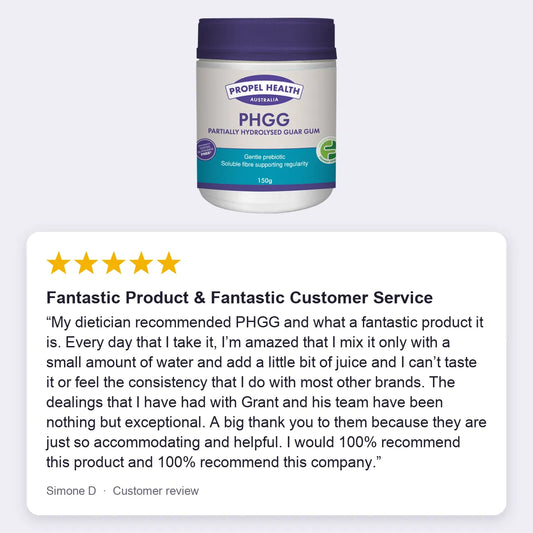
Propel Health Partially Hydrolysed Guar Gum has a 6 g serve, 4 rounded teaspoons, with 25 serves per pack.
3. Inulin: the fermentable fibre

Inulin is a prebiotic fibre, the kind gut bacteria feed on.
Propel Health Organic Inulin Fibre comes from Jerusalem artichoke and gives 4.5 g of dietary fibre in every 5 g serve.
Start with about half a serve and build up over a week or two.
4. Whey protein isolate: the easy protein

A 2017 trial by Reimer and colleagues found both inulin-type fibre and whey protein changed appetite ratings in adults over 12 weeks.
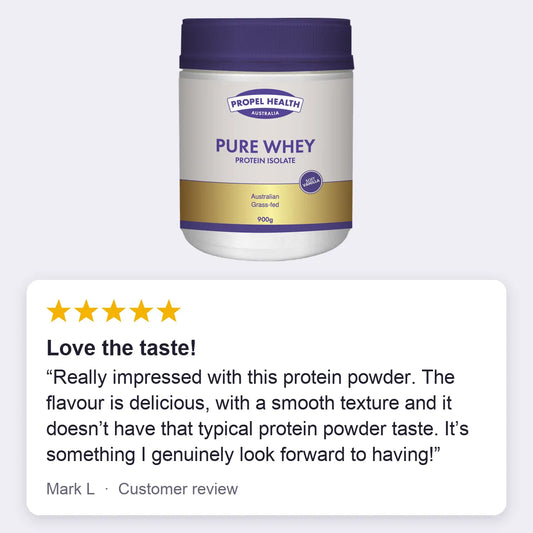
Propel Health Grass-fed Whey Protein Isolate gives 25.1 g of protein in a 30 g serve. Mix it with 250 to 300 mL of cold water or milk.
All four sit together in the protein and fibre supplements collection.
A simple day
- Breakfast: eggs, Greek yoghurt or a whey shake. Aim for 25 g of protein or more.
- Before lunch: one fibre serve in a full glass of water, 15 to 30 minutes ahead.
- Every meal: a palm of protein and some vegetables.
- All day: water. Fibre needs it.
Pick one fibre, not three. Start at half a serve for the first week, then build up.
Some extra wind in the first week or two usually means the serve went up too fast.
Already taking Ozempic?
Fibre and protein still matter.
People on GLP-1 medicines often eat far less, which makes it harder to get enough of either.
Ask your prescriber which fibre and how much protein suits you.
The bottom line
Natural foods will not copy a medicine.
They can make it easier to feel full, meal after meal, and that is the part a person controls every day.
Start with breakfast protein and one fibre. Explore the protein and fibre supplements range.
About the Author
Grant Jenkins is the co-founder of Propel Health Australia and a high-performance athletic development coach with almost 30 years of experience in exercise physiology, nutrition and athlete development.
Disclaimer
This article is for education only. It is not medical advice and does not replace advice from your doctor. Never stop, start or change a prescribed medicine without speaking to your prescriber.
References
- Cani PD, Lecourt E, Dewulf EM, et al. American Journal of Clinical Nutrition. 2009;90(5):1236-1243. doi:10.3945/ajcn.2009.28095
- Brum JM, Gibb RD, Peters JC, Mattes RD. Satiety effects of psyllium in healthy volunteers. Appetite. 2016;105:27-36. doi:10.1016/j.appet.2016.04.041
- Reimer RA, Willis HJ, Tunnicliffe JM, et al. Molecular Nutrition and Food Research. 2017;61(11). doi:10.1002/mnfr.201700484
- Simpson SJ, Raubenheimer D. Obesity: the protein leverage hypothesis. Obesity Reviews. 2005;6(2):133-142.