What Time Should I Go to Bed? Your Step-by-Step Sleep Timeline
TL;DR: What time should I go to bed? Count back 7 hours 45 minutes from the time you need to wake up: five 90 minute sleep cycles, plus 15 minutes to fall asleep. Wake at 6:00 am and lights out is 10:15 pm. Then build the evening backwards from lights out: last coffee 8 hours before, last meal 3 hours before, a hot Epsom salt bath 90 minutes before, screens off at 60. Put your wake time into the calculator below and it does every time for you.
Most people pick a bedtime.
Very few pick a wake time and work backwards.
That is the whole method. The wake time is fixed. Everything else in the day hangs off it.
And it is not just the bedtime. The coffee, the dinner, the bath and the phone all have a time too.
Sleep cycle calculator: what time should I go to bed?
Enter the time you need to wake up. The calculator counts back in 90 minute sleep cycles, adds 15 minutes to fall asleep, and lays out the full evening.
Most adults do best on 5. Training hard? Try 6.
15 minutes is typical.
Asleep by 10:30 pm, 5 full cycles, awake at 6:00 am.
Your sleep timeline
Your night in 90 minute cycles
Waking at the end of a cycle, in light sleep, usually feels easier than being pulled out of deep sleep halfway through. Cycles average about 90 minutes but vary from person to person and through the night, which is why your final cycle ends in a 15 minute wake window.
Get the printable sleep timeline
Fill it in, stick it on the fridge, tick off your week. Enter your email to get the PDF.
One page. Type into it on screen or print it and use a pen.
Done. Your sleep timeline is ready: download the PDF.
Your action: set your wake time first, then read your lights out time off the calculator.
The 90 minute sleep cycle, and why there is a wake window
Through the night, sleep runs in cycles of light sleep, deep sleep and dreaming sleep. Each one lasts about 90 minutes.
Waking at the end of a cycle, in light sleep, usually feels easier than being pulled out of deep sleep halfway through.
So the target is whole cycles. Four cycles is 6 hours. Five is 7.5 hours. Six is 9 hours.
Most adults need 7 to 9 hours, so five cycles is the starting point. Training hard? Try six.
Cycles are not exactly 90 minutes. They vary from person to person and run longer later in the night. That is why the calculator gives a 15 minute wake window, not a single minute.
Your action: set the alarm for the end of the window. If you wake naturally inside it, get up.
A consistent sleep schedule starts in the morning
A consistent sleep schedule means the same wake time every day. Weekends included.
Why the wake time and not the bedtime? You control when you get up. You cannot force when you fall asleep.
Then get outside within 30 minutes of waking. Ten minutes of daylight helps set the body clock that decides when you feel sleepy tonight.
Your action: same wake time for seven days straight, and ten minutes of morning light.
A bedtime routine for adults, hour by hour
Here is the evening, counted back from lights out. The calculator puts real times on each step.
- 8 hours before: last coffee.
- 3 hours before: last main meal and last alcoholic drink.
- 2 hours before: dim the house lights.
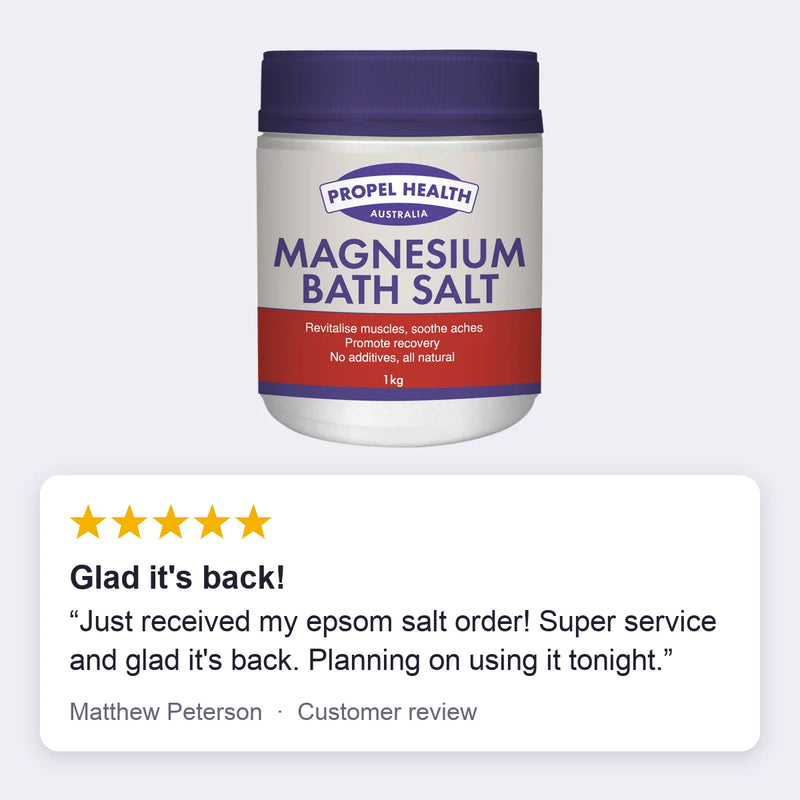
- 90 minutes before: hot Epsom salt bath, 15 to 20 minutes.
- 60 minutes before: screens off, bedroom cool.
- 30 minutes before: write tomorrow's to-do list.
- 15 minutes before: into bed, lights low, slow breathing.
- Lights out.
Why 8 hours for coffee? Caffeine takes hours to clear. In one sleep lab study, caffeine taken 6 hours before bed still cut total sleep by more than an hour.
Your action: pick one step this week. Most people start with the coffee cut-off.
How long before bed should you eat?
About 3 hours.
A big meal close to bed keeps digestion working when the body is trying to wind down. Alcohol works the same way. It can make you drowsy, but sleep later in the night tends to be lighter and more broken.
A small snack is fine. It is the main meal and the drinks that move.
Your action: eat dinner 3 hours before lights out, and make that the last drink too.
A relaxing bedtime routine: the hot Epsom salt bath
Ninety minutes before lights out, run a hot bath.
Add 2 cups of Epsom salt and soak for 15 to 20 minutes.
Here is what happens next. When you get out, your body temperature drops. That drop is part of the body's natural lead in to sleep. A review of 17 studies found a warm bath or shower 1 to 2 hours before bed helped people fall asleep sooner.
No bath? A hot shower at the same time does the same job.
Your action: bath at 90 minutes before lights out, three nights this week.
Wind down routine for sleep: the last 60 minutes
Sixty minutes out, the screens go off. Phone down, TV off.
Bright light late in the evening pushes back the body's night time signal. Lower light lets it come on time.
Cool the bedroom to around 18 to 20 degrees. More on the room itself in 5 tips to improve your bedroom for sleep.
At 30 minutes, write tomorrow's to-do list. Five minutes on paper. In one study, people who wrote a to-do list before bed fell asleep faster than people who wrote about what they had already done.
At 15 minutes, into bed. A paper book, lights low, then slow breathing: in for 4, out for 6.
Your action: phone on charge outside the bedroom, 60 minutes before lights out.
Sleep hygiene for older adults
With age, the body clock tends to shift earlier. Sleepy earlier in the evening, awake earlier in the morning.
That is fine. Work with it. Put in the earlier wake time and let the calculator move the whole evening.
Morning light matters even more. So does keeping any daytime nap short, under 30 minutes, and before 3 pm.
The recommendation for adults over 65 is 7 to 8 hours, so five cycles still fits.
Your action: enter your real wake time, even if it is 5:00 am.
Your first week
Do not try all ten steps on night one.
Fix the wake time. Add the coffee cut-off. Add the bath. Then the screens.
Tick each one off on the printable timeline. Five nights out of seven is the target.
Your action: claim the printable sleep timeline above and stick it on the fridge.
General information for healthy adults, not medical advice. If you have ongoing trouble sleeping, talk to your GP.
References
- Drake C, Roehrs T, Shambroom J, Roth T. Journal of Clinical Sleep Medicine. 2013.
- Haghayegh S, Khoshnevis S, Smolensky MH, Diller KR, Castriotta RJ. Sleep Medicine Reviews. 2019.
- Scullin MK, Krueger ML, Ballard HK, Pruett N, Bliwise DL. Journal of Experimental Psychology: General. 2018.
- Gooley JJ, Chamberlain K, Smith KA, et al. Journal of Clinical Endocrinology and Metabolism. 2011.
- Ebrahim IO, Shapiro CM, Williams AJ, Fenwick PB. Alcoholism: Clinical and Experimental Research. 2013.
- Hirshkowitz M, Whiton K, Albert SM, et al. National Sleep Foundation's sleep time duration recommendations. Sleep Health. 2015.