What Is a Synbiotic Supplement?
TL;DR A synbiotic combines probiotics with prebiotics in the same supplement, providing beneficial microorganisms alongside the substrate that supports beneficial gut bacteria.
What Is a Synbiotic Supplement?
A synbiotic supplement combines probiotics and prebiotics in the same formula.
The probiotic provides beneficial live microorganisms, while the prebiotic provides a substrate that can be used by microorganisms in the gut.
Put simply:
Probiotic = beneficial microorganisms
Prebiotic = food for beneficial microorganisms
Synbiotic = both together
The idea is to support the gut from both directions: introducing beneficial microorganisms while also providing the nutritional environment that can help beneficial microbes thrive.
This combination is why synbiotics have become increasingly popular in gut health supplements.
What Is the Difference Between a Probiotic and a Synbiotic?
The main difference is that a probiotic provides beneficial live microorganisms, while a synbiotic combines live microorganisms with a prebiotic component.
A probiotic might contain strains of Lactobacillus, Bifidobacterium or spore-forming probiotics such as Bacillus coagulans.
A synbiotic goes one step further by combining the microorganism with a substrate designed to support beneficial microbial activity.
This makes synbiotics an interesting option for people who would otherwise take a probiotic and prebiotic separately.
What Are the Benefits of a Synbiotic?
The main benefit of a synbiotic is that it combines beneficial microorganisms with a prebiotic substrate in the same supplement. This allows the two components to work together to support the gut microbiome.
Potential synbiotic benefits include:
- Gut microbiome support: Synbiotics can help support beneficial microorganisms and create a gut environment in which they can thrive.
- Digestion and bowel regularity: Prebiotic fibres and probiotics may support digestive function, stool consistency and regular bowel movements.
- Gut barrier support: Research suggests some synbiotics may help support the intestinal barrier and healthy inflammatory responses.
- Immune function: Because the gut microbiome interacts closely with the immune system, synbiotics are being investigated for their role in supporting normal immune function.
- Metabolic health: Emerging research has investigated synbiotics in relation to glucose metabolism, insulin sensitivity and blood lipids, although effects depend heavily on the specific probiotic strains and prebiotic ingredients used.
The important point is that not every synbiotic provides the same benefits. Effects depend on the probiotic strain, prebiotic substrate, dose and combination used.
What Are the Side Effects of Synbiotics?
Synbiotic supplements are generally well tolerated, but some people experience temporary digestive symptoms when they first start taking them.
These can include:
- gas
- bloating
- stomach rumbling
- mild abdominal discomfort
- changes in bowel movements
Often it is the prebiotic component that causes the initial adjustment. Prebiotic fibres are fermented by gut bacteria, and increasing fermentation can temporarily increase gas.
This is why introducing prebiotic fibre gradually can be useful, particularly if your digestive system is sensitive. Appropriate dosing is important because excessive amounts of prebiotic substrate can increase unwanted gas.
What Is the Best Synbiotic Supplement?
The best synbiotic supplement should provide both a well-characterised probiotic and an effective prebiotic rather than simply combining a token amount of each.
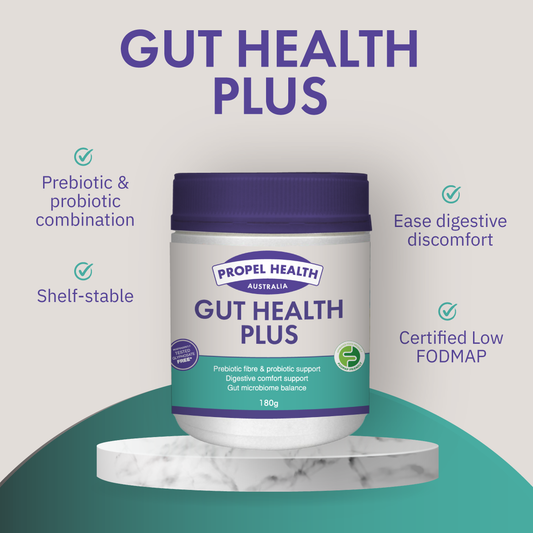
Our Gut Health Plus combines Bacillus coagulans with PHGG (Partially Hydrolysed Guar Gum), a soluble prebiotic fibre.
We like this combination because the two ingredients have distinct roles:
Bacillus coagulans provides the probiotic component.
PHGG provides soluble prebiotic fibre that supports beneficial gut bacteria while also supporting bowel regularity and stool consistency.
Research has also investigated synbiotic formulations containing Bacillus coagulans in people with IBS, with improvements reported in some gastrointestinal symptoms, although results should not be assumed to apply to every formulation or strain.
For people wanting a simple probiotic + prebiotic in one daily supplement, [Gut Health Plus] would therefore be our pick.
What Are the Top-Rated Probiotics in Australia?
There isn't one probiotic that can objectively be called the best probiotic in Australia for everyone.
Probiotic effects can be strain-specific, which means the microorganism, dose and intended purpose all matter.
It's might be worth exploring the benefits of Bacillus coagulans.
Unlike many traditional probiotics, Bacillus coagulans is a spore-forming bacterium. Its spore-forming characteristics make it particularly useful in supplement formulations.
Clinical research has investigated specific Bacillus coagulans strains for digestive health, including IBS and gastrointestinal symptoms.
Is Gut Health Plus FODMAP Friendly?
Yes. Gut Health Plus is FODMAP Friendly Certified, making it suitable for people following a low FODMAP diet when used according to the recommended serving size.
It combines PHGG (Partially Hydrolysed Guar Gum), a gentle soluble prebiotic fibre, with the probiotic Bacillus coagulans.
This makes Gut Health Plus an interesting synbiotic option for people who want the benefits of both a prebiotic and probiotic, but find that some highly fermentable prebiotic fibres can trigger bloating or digestive discomfort.
Importantly, FODMAP certification applies to the finished product and specified serving size, not simply to PHGG as an individual ingredient.
What Is the Best Synbiotic Supplement for Women?
For women, a good synbiotic should support the same fundamentals of gut health: beneficial microorganisms, prebiotic fibre and digestive function.
A combination containing Bacillus coagulans and PHGG can be particularly interesting because it provides both a probiotic and soluble prebiotic fibre in one formula.
Research into specific Bacillus coagulans strains has investigated potential benefits including:
- digestive comfort
- bowel regularity
- gastrointestinal symptoms
- gut microbial support
There is also emerging research into Bacillus coagulans and women's intimate health.
For example, a clinical study in 70 reproductive-age women investigated topical Bacillus coagulans for vaginal discomfort and vaginal microbiota.
However, this should not be interpreted as evidence that an oral Bacillus coagulans supplement provides the same effect.
Support Your Gut With a Synbiotic
Get probiotics and prebiotics together with Gut Health Plus, combining Bacillus coagulans with FODMAP Friendly Certified PHGG.

About the Author
Grant Jenkins is the founder of Propel Health Australia and a physiologist and former high-performance coach with more than 25 years of experience in human performance, nutrition and health education. He combines scientific research with practical experience to help Australians make informed decisions about gut health, nutrition and supplementation.
Disclaimer
This article is for educational purposes only and is not intended to diagnose, treat, cure or prevent any disease. The effects of probiotics and synbiotics can vary depending on the strain, dose and individual. If you have a medical condition, persistent digestive symptoms or take medication, speak with a qualified healthcare practitioner before starting a new supplement.