Should You Take Inulin With Meals to Reduce Bloating?
TL;DR: If inulin makes you bloated, try taking a smaller amount with meals and increasing your dose gradually. But if your real goal is to reduce bloating, gas and digestive discomfort, changing when you take inulin may only be part of the solution.
Inulin powder is an excellent prebiotic fibre.
It feeds beneficial gut bacteria and supports bowel regularity, but because it is fermented by gut bacteria, it can also increase gas and bloating in some people.
So if inulin is making you uncomfortable, start with the basics:
Start low. Build slow. Take it with food. Stay hydrated.
But there's another question worth asking:
Are you trying to take inulin, or are you trying to stop feeling bloated?
If bloating is the problem you're actually trying to solve, repeatedly changing when you take inulin may not address everything that's contributing to your digestive discomfort.
Gut Health Relief: A Broader Approach to Bloating
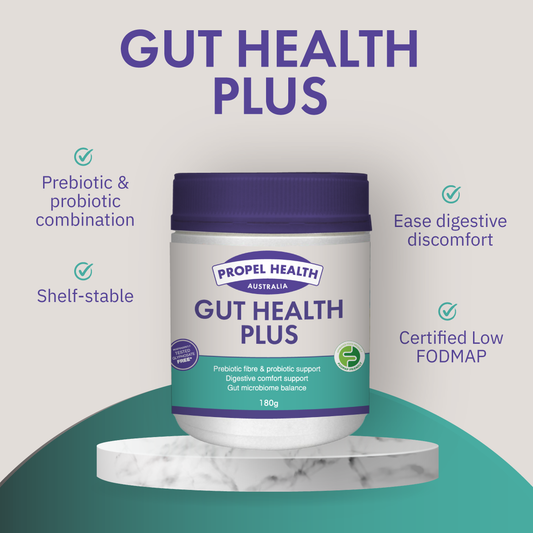
This is why we formulated Gut Health Relief, our anti-bloating and digestive support powder.
Instead of relying on inulin alone, Gut Health Relief combines several ingredients that support different aspects of digestive health:
Slippery Elm Bark to help soothe the digestive tract.
Psyllium Husk to support bowel regularity and healthy stool formation.
Yucca Root to support digestive comfort.
Organic Inulin to nourish beneficial gut bacteria.
Sunflower Lecithin as a natural source of phospholipids, including phosphatidylcholine.
Interestingly, a 2022 randomised study in people with constipation-predominant IBS found that adding a supplement containing at least inulin and choline to a constipation-specific diet improved abdominal pain and was associated with a 34.8% improvement in bloating severity.
If you're taking inulin because you're trying to feel less bloated, Gut Health Relief may provide a more comprehensive approach.
Try Gut Health Relief, our powder for gut health and bloating.

Take Inulin With Meals to Reduce Bloating
If inulin makes you feel bloated, taking inulin with meals may be worth trying.
Eating it alongside other foods spreads the fibre through a larger meal rather than delivering a concentrated amount of fermentable fibre by itself.
More importantly:
Start Low. Build Slow.
Your gut bacteria ferment inulin. This is one of the reasons inulin can be beneficial, but fermentation also produces gases.
Suddenly adding a large amount of inulin therefore gives your gut bacteria considerably more material to ferment.
For someone new to inulin, a better approach may be to:
- start with a small serving
- take it with a meal
- drink adequate water
- increase your intake gradually
- monitor how your digestive system responds
If bloating continues despite doing this, however, timing might not be the real problem.
It may simply be that inulin isn't the ideal fibre for your individual digestive system.
Best Time to Take Inulin on an Empty Stomach for Bloating
There isn't a universally best time to take inulin on an empty stomach for bloating.
In fact, if you're already experiencing digestive discomfort from inulin, taking it on an empty stomach wouldn't necessarily be my first choice.
Try taking a smaller amount alongside breakfast or another regular meal instead.
Remember that the objective isn't to find a magical time of day when inulin stops fermenting.
Fermentation is part of what makes inulin a prebiotic.
The better question is:
How much inulin can your digestive system comfortably tolerate?
Some people tolerate it extremely well.
Others don't.
And that's perfectly useful information when deciding which fibre belongs in your daily routine.
Inulin Supplement: Take With Food or Water on an Empty Stomach for Bloating?
You can mix an inulin supplement with food or water, but if bloating is your concern, I'd generally favour taking a smaller amount with food initially.
For example, inulin can be mixed into:
- yoghurt
- smoothies
- breakfast foods
- water taken alongside a meal
Don't overlook hydration either.
Fibre and adequate fluid intake should generally go together, particularly when your goal includes healthy bowel regularity.
If you're tolerating inulin comfortably, the exact timing becomes less important.
If you're not tolerating it comfortably, repeatedly changing the timing may eventually become less useful than reconsidering the type and amount of fibre you're taking.
Take Inulin With Meals to Reduce Gas and Bloating
Taking inulin with meals may help some people reduce gas and bloating, particularly when combined with a gradual introduction.
But there is an important distinction here.
Some gas is a natural consequence of bacterial fermentation.
Inulin reaches the large intestine where bacteria ferment it and produce metabolites, including short-chain fatty acids.
That's part of its prebiotic effect.
Unfortunately, increased fermentation can also mean increased gas.
So if you've tried:
smaller doses → gradual increases → taking it with meals → adequate hydration
…and you're still regularly uncomfortable, don't assume you simply need to persevere.
Your digestive system may respond better to a different fibre or a formula designed specifically around digestive comfort.
Inulin Supplement: Take With Food or on an Empty Stomach for Bloating?
If you're wondering whether to take an inulin supplement with food or on an empty stomach for bloating, I'd start with food.
But I'd also look beyond timing.
Ask yourself:
Why am I actually taking inulin?
If you're taking it because you specifically want a concentrated prebiotic fibre, experimenting with dose and timing makes sense.
But if you bought inulin because your actual problem is:
- bloating
- gas
- constipation
- irregular bowel movements
- digestive discomfort
…then your goal isn't really to take inulin.
Your goal is to feel better.
And that's where it may make sense to consider a broader approach.
What If Inulin Is Still Making You Bloated?
This is where people can get stuck.
They've heard that prebiotic fibre is good for the gut, so when a particular fibre makes them uncomfortable, they assume they should simply keep taking it.
Not necessarily.
Different fibres behave differently in the digestive system.
And digestive discomfort isn't always caused by one thing.
Bloating can occur alongside irregular bowel movements, constipation, gas and other digestive issues.
For someone primarily trying to improve bloating and digestive comfort, it can therefore make sense to look beyond a single isolated prebiotic.
Gut Health Relief: A Broader Approach to Bloating
This is why we formulated Gut Health Relief - an anti-bloating supplement. .
Rather than relying on inulin alone, it combines several complementary plant-based ingredients:
Slippery Elm Bark traditionally used to soothe the digestive tract.
Psyllium Husk supports bowel regularity and healthy stool formation.
Yucca Root has traditionally been used to support digestive comfort.
Organic Inulin provides prebiotic fibre to nourish beneficial gut bacteria.
Sunflower Lecithin complements the broader digestive-support formula, especially for IBS.
The idea is simple.
Rather than asking one ingredient to do everything, Gut Health Relief combines prebiotic support, bowel regularity and digestive comfort in one daily powder.
If bloating is the reason you started searching for inulin in the first place, consider Gut Health Relief for natural bloating relief.
Is Inulin Bad for Bloating?
Not necessarily.
Inulin can be an excellent prebiotic fibre and many people tolerate it extremely well.
The issue is individual tolerance.
If you experience bloating after taking inulin, try reducing the amount and introducing it more gradually. Taking it alongside meals may also be easier on your digestive system.
But don't lose sight of why you're taking it.
If your objective is better gut health with less bloating, the best supplement isn't necessarily the one containing the largest amount of a particular prebiotic.
It's the approach that you can tolerate consistently and that best matches your digestive needs.
Inulin vs Gut Health Relief for Bloating
| Inulin Powder | Gut Health Relief | |
|---|---|---|
| Primary approach | Concentrated prebiotic fibre | Multi-ingredient digestive support |
| Prebiotic support | Yes | Yes |
| Contains inulin | Yes | Yes |
| Psyllium husk | No | Yes |
| Slippery elm | No | Yes |
| Yucca root | No | Yes |
| Supports bowel regularity | Yes | Yes |
| Formulated specifically around digestive comfort | No | Yes |
| Best suited to | People wanting a simple prebiotic fibre | People looking for broader bloating, regularity and digestive support |
Neither is inherently "better."
They simply solve slightly different problems.
If you want to add a concentrated prebiotic fibre to your diet, inulin is a logical option.
If your primary concern is bloating, gas, constipation or general digestive discomfort, Gut Health Relief provides a more comprehensive approach.
How to Reduce Bloating When Taking Fibre
Whichever fibre supplement you choose, don't assume more is automatically better.
Three simple principles can make a substantial difference:
1. Start low.
Give your digestive system time to adapt rather than dramatically increasing fibre overnight.
2. Stay hydrated.
Adequate water is particularly important when increasing fibre intake.
3. Choose fibre you can actually tolerate.
A supplement isn't helping your gut health if taking it every day leaves you consistently uncomfortable.
The best gut health routine is one you can maintain.
Final Takeaway
If inulin is causing bloating, start by taking a smaller amount with meals and gradually increase it as tolerated.
But if you've experimented with timing and dose and still feel uncomfortable, don't keep forcing a fibre that doesn't agree with you.
Your original goal was probably never "consume more inulin."
It was to have a gut that feels better.
For people whose main concerns are bloating, gas, constipation and digestive discomfort, Gut Health Relief combines prebiotic fibre with psyllium husk, slippery elm and yucca root to provide broader daily digestive support.
Try Gut Health Relief, our powder for gut health and bloating.
About the Author
Grant Jenkins is the founder of Propel Health Australia and a physiologist with more than 25 years of experience in human performance, nutrition and health education. He combines scientific research with practical experience to help Australians make informed decisions about nutrition, supplementation and long-term health.
Disclaimer
This article is provided for educational purposes only and is not intended to diagnose, treat, cure or prevent any disease. Persistent or unexplained bloating should be discussed with an appropriately qualified healthcare practitioner. Always consult your healthcare practitioner before starting a new supplement or making significant dietary changes.