Supplements for Triathlon: A Simple Stack for Age Groupers Over 35
More on: Beetroot Powder Guides · Supplement Buyer's Guides
TL;DR: The supplements for triathlon that matter are a short list added in order: a prebiotic fibre for your gut, enough protein, a daily joint formula, and beetroot if you want a food source of dietary nitrates. Race-day fuel (carbohydrate, fluid and electrolytes) is a separate job. Add one product every two to four weeks so you know what each one is doing.
Open a triathlete's pantry.
Gels, chews, drink mix, recovery shake, three kinds of electrolytes, something a mate swore by.
If you try to do everything at once, you do nothing for nothing.
Here is the order I would use.
Training supplements and race fuel are different jobs
Race fuel is carbohydrate, fluid and sodium, practised in training and used on the day.
Daily supplements are what you take on Tuesday in a normal week. This post is about those.
Your action: keep your race fuel and your daily supplements on different shelves.
1. Gut first: a prebiotic fibre
Everything you eat in a big training week has to get through your gut. It is phase one of everything I coach.
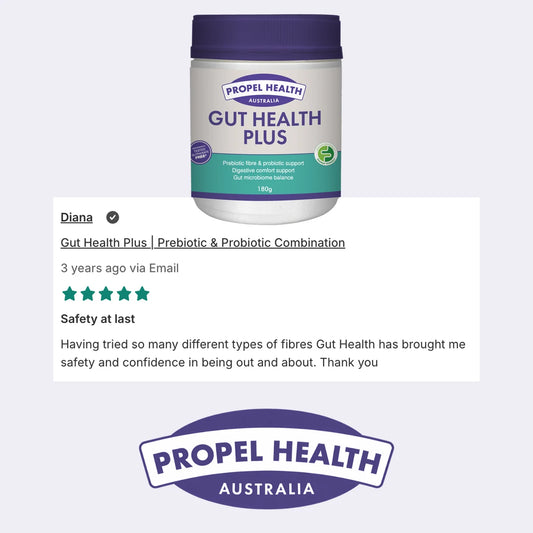
Our partially hydrolysed guar gum (PHGG) is an unflavoured prebiotic fibre that dissolves clear in water. The label suggests starting at 5 g a day and building to 6 g.
Your action: take it in the evening, away from key sessions, for two weeks before adding anything else.
2. Protein: enough, spread across the day
Older muscles need a bigger dose per meal. A study by Moore and colleagues found older men needed about 0.4 g of protein per kilogram of body weight at a meal, compared with about 0.24 g for younger men. For a 75 kg triathlete, that is around 30 g per meal.
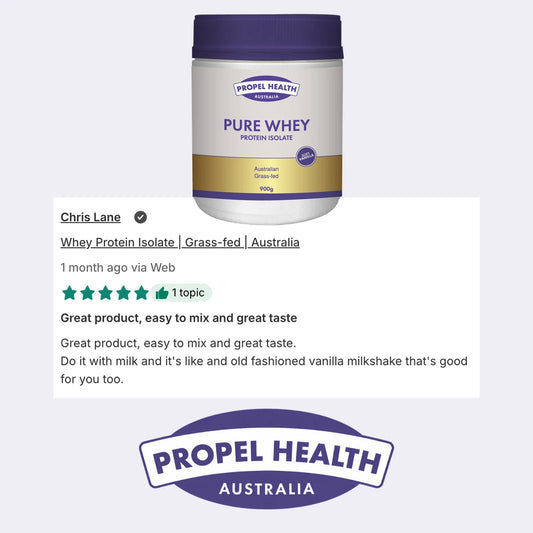
If your breakfast or post-session meal falls short, a scoop of whey protein isolate is the easy top-up. Check the label for grams per serve.
Your action: look at your breakfast. Is there 30 g of protein in it?
3. A daily joint formula
Three disciplines means three ways to load your joints, all week, all season.
Look for collagen peptides, glucosamine, chondroitin and MSM together, with every dose on the label. Ours is Complete Joint Care, all four in one 5 g scoop with vitamin C.
Each 5 g serve provides 40 mg of vitamin C, which contributes to normal collagen formation for the normal structure of cartilage and bones. It also provides zinc, which contributes to the maintenance of normal bones.
The detail is in joint supplements for triathletes.
Your action: take it every day for at least 8 to 12 weeks before you judge it.
4. Beetroot
Beetroot is a food source of dietary nitrates, which endurance researchers have studied for more than a decade. A 2014 review by Andrew Jones summarised that work.
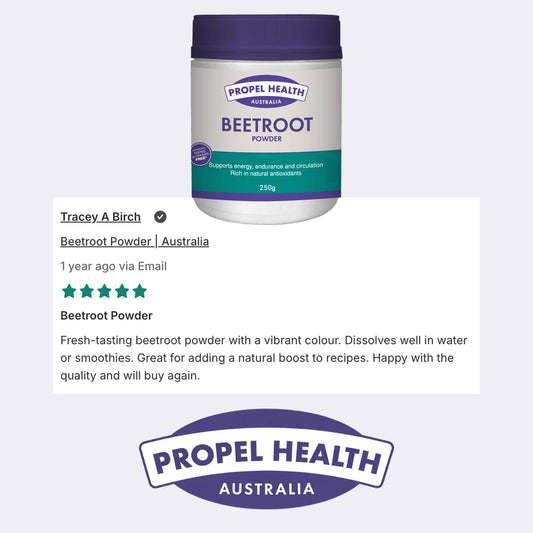
Most studies used concentrated beetroot juice. A teaspoon of powder is a simple food-based way to include beetroot every day.
Our beetroot powder is one ingredient, air-dried, 5 g (one rounded teaspoon) per serve.
Your action: stir it into a smoothie or juice, not water. It tastes like beetroot.
What about creatine?
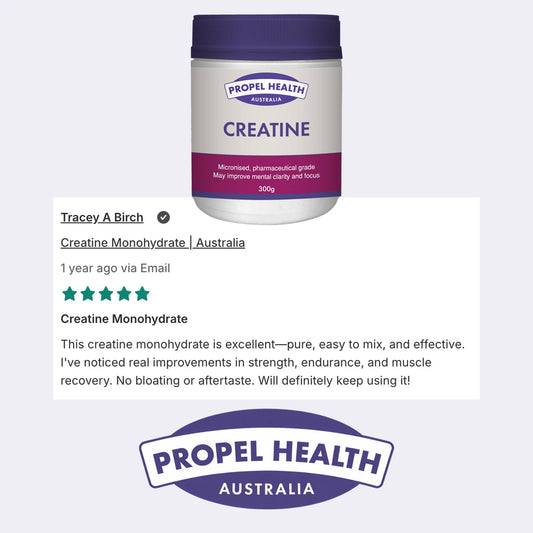
Creatine is the most researched supplement in sport, but most of that research is on short, hard efforts. It also adds a little water weight, which matters when you are carrying yourself for hours.
For triathletes over 40 it is worth considering in the off-season alongside strength work. Ours is creatine monohydrate, 5 g per serve.
Your action: if you try it, start in the off-season, not race build.
If you are on medication, carrying an injury or have a medical condition, speak with your healthcare provider before starting any new supplement.
Grant Jenkins is an ESSA Accredited Exercise Physiologist and high-performance athletic development coach with almost 30 years of coaching behind him, including national academy and professional athletes. He is a co-founder of Propel Health Australia.
References
- Moore DR, Churchward-Venne TA, Witard O, et al. J Gerontol A Biol Sci Med Sci. 2015;70(1):57-62.
- Jones AM. Dietary nitrate supplementation and exercise performance. Sports Med. 2014;44 Suppl 1:S35-45.