Protein Powder for Seniors: What to Look For
More on: Collagen Guides
TL;DR: Protein powder for seniors works best when it is simple: one clear ingredient, a known amount of protein per serve and no strong flavour. Whey is a complete protein, collagen is not, and an unflavoured powder can go straight into porridge, soup or coffee.
Has Mum started skipping the eggs at breakfast, or is Dad living on tea and toast?
It happens in plenty of Australian homes. Meals get smaller, and protein is often the first thing to slip.
A spoonful of powder will not replace good meals, but it can make the meals you already eat count for more. If you are browsing our supplements for seniors, here is what to look for first.
Can a 70 year old take protein powder?
Yes. A plain protein powder is a food, not a medicine, so it sits in the same category as milk, eggs or yoghurt.
Most older adults can use one the same way they use any other protein food: a measured scoop stirred into something they already eat.
The one caveat: if your GP or dietitian has given you a protein limit or a special diet, follow their advice over any label.
Start with one serve a day in a familiar food, such as morning porridge, and see how it fits your routine.
Action: check the serve size on the label and add one scoop to breakfast this week.
Which protein powder is best for seniors?
The best one is the one that actually gets used. For most older Australians, that means three things.
First, a short ingredient list. One ingredient is easier to read and easier to trust.
Second, protein per serve printed clearly on the nutrition panel, so you know exactly what each scoop adds.
Third, no strong flavour. A sweet vanilla shake gets old fast, while an unflavoured powder disappears into food you already enjoy.
Action: turn the tub around and read the ingredient list before the front of the pack.
What is the best protein powder for seniors over 70 in Australia?
Look for a powder made for everyday food use rather than sports performance. Many sports powders are flavoured, sweetened and sized for big shakes.
Our collagen protein powder is one example of the simple style. It has one ingredient, bovine collagen peptides (Type I and III), with 9.0 g of protein in every 10 g serve and 30 serves in a 300 g tub.
It is unflavoured and stirs into coffee, tea, porridge, soup or smoothies. It is also non GMO, gluten free and dairy free.
It is packed and shipped from Brendale, Queensland.
Action: pick the food you eat most days and choose a powder that will disappear into it.
Should seniors drink protein powder?
Food comes first. A wide variety of meat, fish, eggs, dairy, legumes and nuts covers protein for most people.
A powder earns its place when meals are small, when cooking has become a hassle, or when someone simply prefers a lighter breakfast.
It does not have to be a drink. Stirring a serve into porridge, soup, mashed potato or a cuppa often goes down better than a separate shake.
Pair it with the other everyday habits: regular walks, decent sleep and catching up with your GP or a dietitian.
Action: write down a normal day of meals and spot the one with the least protein. That is where a scoop goes.
How much protein do older Australians need?
The NHMRC sets recommended dietary intakes (RDIs) for protein by body weight, and they rise after 70.
For adults aged 19 to 70, the NHMRC RDI is 0.84 g per kilogram of body weight a day for men and 0.75 g per kilogram for women.
For adults over 70, the NHMRC RDI is 1.07 g per kilogram a day for men and 0.94 g per kilogram for women.
So a 70 kg man over 70 has an RDI of about 75 g a day. A 60 kg woman over 70 has an RDI of about 56 g.
Spreading that across breakfast, lunch and dinner is usually easier than loading it all into one meal.
Action: multiply your weight by the figure for your age group to find your own daily number.
Whey protein or collagen protein for seniors?
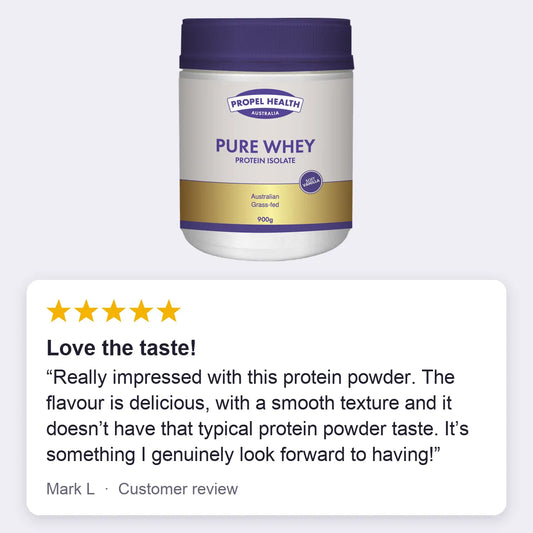
Whey is a complete protein. It comes from milk and contains all nine essential amino acids.
Collagen is not a complete protein. It is low in some essential amino acids, so it should sit alongside other protein foods, not replace them.
Collagen does have practical strengths. It is unflavoured, dairy free and dissolves in hot drinks, which suits people who avoid dairy or will not drink a shake.
Many households use both: whey in a smoothie, collagen in the morning coffee or a bowl of soup.
If you want to know how collagen is made into a powder, our guide to hydrolysed collagen peptides covers the topic.
Action: if dairy is not an issue, use whey as the main powder and add collagen where flavour and texture matter.
What to do next
Work out the NHMRC RDI for your age and weight, look at where protein is light in your day, and choose one unflavoured powder that fits a food you already eat. Then keep it on the bench next to the kettle so it actually gets used.