Is Glyphosate Damaging Your Gut?
More on: Gut Health Guides · PHGG Guides
TD;LR Glyphosate is widely present in food and may disrupt gut bacteria. Reduce exposure & support your gut by ensuring your supplements are tested for glyphosate.
Gut health conversations usually focus on what to add:
Probiotics. Prebiotics. Fibre. Fermented foods.
But there’s a more important question you need to ask:
What might be damaging your gut in the first place?
One of the emerging areas of research is the potential impact of glyphosate - the world’s most widely used herbicide - on the human microbiome.
NOTE: Propel Health independently tests our gut health products for glyphosate.
Glyphosate and the Gut Microbiome
Glyphosate is widely used in agriculture and is now commonly detected in food and water sources.
This 2022 study concludes:
...approximately 81 % of the U.S. general population 6 years of age and older had been recently exposed to glyphosate.
And that the variation in glyphosate concentration may:
...reflect the relevance of diet as a potential exposure source.
It was originally considered safe for humans because it targets a biological pathway (the shikimate pathway) that human cells don’t have.
But here’s the catch:
Your gut bacteria do have this pathway
In other words, while glyphosate may not directly affect your cells, it may interact with the microbes that live inside you.
A large analysis of human microbiome data found that more than half of common gut bacterial species may be sensitive to glyphosate and that:
...research points to the herbicide’s potential to disrupt healthy microbiomes...
Why This Matters to You
Your gut microbiome plays a role in:
- digestion
- immune function
- inflammation
- metabolism
- nutrient absorption
- mental clarity
If something selectively affects certain bacteria, it may shift the balance of your microbiome.
Researchers have suggested this could contribute to dysbiosis, an imbalance between beneficial and less desirable bacteria.
In simple terms:
1) some bacteria may be reduced, and
2) others may become more dominant
Over time, that imbalance may influence how your gut functions.
Exposure Isn’t Rare
Glyphosate exposure doesn’t require direct contact with herbicides.
You could be exposed through:
- food (particularly grains and crops)
- water
This means your gut microbiome may be exposed regularly, even if you’re not aware of it.
What Could This Mean for You?
But it does raise a practical question:
If something has the potential to disrupt your gut bacteria…
should we at least consider reducing exposure and supporting the gut?
If you're experiencing:
- bloating
- digestive discomfort
- irregular bowel patterns
- persistent cravings
this becomes a relevant conversation.
A Practical Approach: Reduce + Support
Rather than overreacting, a more useful approach is simple:
1. Reduce Potential Gut Stressors
This includes:
- ultra-processed foods
- high sugar diets
- and where possible, exposure to unwanted residues
Even small improvements here can make a difference.
2. Support Your Gut
This is where most gut health strategies come in.
Supporting the microbiome typically involves:
- increasing fibre intake
- feeding beneficial bacteria
- maintaining consistency
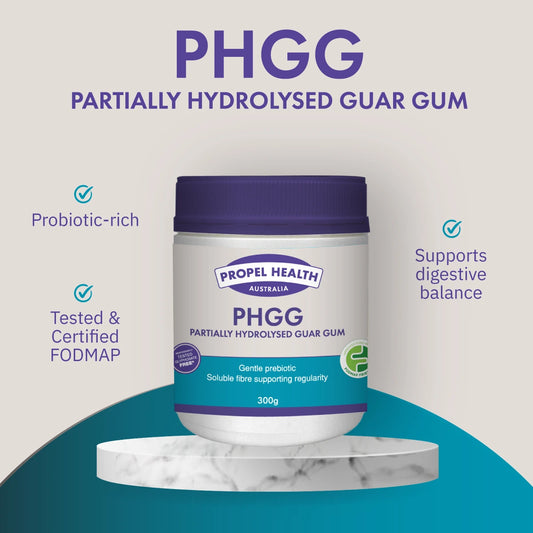
A gentle prebiotic fibre such as PHGG is commonly used to help:
- support beneficial gut bacteria
- improve digestion
- assist with regularity
3. Choose Cleaner Options
This is where quality matters.
If you’re putting something into your body daily, it makes sense to consider what else might be coming with it.
That’s why some products are now independently tested for glyphosate, pesticides, and contaminants, giving an extra layer of confidence around what you’re consuming.
The Bigger Picture
Your gut health isn’t just about what you add (via positiva)
It’s also about what you remove (via negativa)
You can take the best supplements in the world…
But if your gut is constantly exposed to factors that may disrupt it, progress becomes harder.
Final Thoughts
The research on glyphosate and the microbiome is still evolving.
But it highlights an important shift in thinking from:
Gut health is just about nutrition
To:
Gut health is about environment, exposure and balance
Your approach doesn’t require extremes.
Simply,
- reduce obvious stressors
- support your microbiome
- and be mindful of what you consume daily
You might see your biggest gain not from adding more…
But from removing what’s working against you.
Replenish your gut with Glyphosate-tested PHGG

Disclaimer
Propel Health offers this article for education purposes only. Please consult your Health Practitioner for personalised and specific information.
About the Author
Grant Jenkins is the founder of Propel Health Australia and a high-performance coach & physiologist with over 25 years’ experience working with elite and developing athletes. He has formulated nutritional supplements used by athletes, families and health professionals across Australia. Grant combines real-world coaching experience with evidence-based research to bridge the gap between performance science and practical health.
References
Ospina M, Schütze A, Morales-Agudelo P, Vidal M, Wong LY, Calafat AM.
Exposure to glyphosate in the United States: Data from the 2013–2014 National Health and Nutrition Examination Survey.
Environment International. 2022;170:107599.
doi:10.1016/j.envint.2022.107599
Puigbò P, Leino LI, Rainio MJ, Saikkonen K, Saloniemi I, Helander M.
Does Glyphosate Affect the Human Microbiota?
Life. 2022;12(5):707.
doi:10.3390/life12050707