Hesperidin Benefits
TL;DR: Hesperidin benefits may include supporting healthy blood pressure, circulation, blood vessel function, antioxidant defences and a healthy inflammatory response.
Hesperidin Benefits: Research?
Most people know oranges are rich in vitamin C.
Far fewer know about hesperidin.
Hesperidin is a naturally occurring citrus flavonoid found predominantly in oranges and mandarins, with smaller amounts found in lemons and grapefruit.
In fact, hesperidin is one of the major flavonoids found in oranges and orange juice.
Researchers have become increasingly interested in hesperidin benefits because human studies have investigated its potential effects on inflammation, oxidative stress, circulation, blood pressure and cardiovascular health.
So what does the research actually tell us?
What Are the Hesperidin Benefits?
Hesperidin doesn't appear to act through just one pathway.
Research suggests its potential benefits are related to several interconnected areas of health, particularly blood vessel function, inflammation and oxidative stress.
Here are some of the most interesting findings.
1. Hesperidin Benefits for Inflammation
One of the strongest recent pieces of evidence comes from a 2026 systematic review and meta-analysis involving 10 randomised controlled trials and 532 adults.
Researchers found that hesperidin supplementation significantly reduced two inflammatory markers:
- C-reactive protein (CRP)
- Tumour necrosis factor-alpha (TNF-α)
The researchers also found reductions in IL-6 among participants with existing health conditions, including type 2 diabetes and previous myocardial infarction.
This is interesting because chronic, low-grade inflammation is associated with numerous metabolic and cardiovascular conditions.
Rather than describing hesperidin as an "anti-inflammatory treatment", the research suggests it may help support a healthier inflammatory balance.
2. Hesperidin Benefits for Heart Health
Cardiovascular health is one of the most researched potential hesperidin benefits.
Human clinical research has investigated hesperidin in relation to:
- blood vessel function
- circulation
- endothelial function
- blood pressure
This makes sense because healthy blood vessels need to expand and contract appropriately to regulate blood flow throughout the body.
Hesperidin appears particularly interesting for its effects on the endothelium, the thin layer of cells lining our blood vessels.
3. Hesperidin Benefits for Blood Pressure
Several human studies have investigated hesperidin and blood pressure.
Research suggests hesperidin supplementation may help support healthy blood pressure, with some evidence particularly relating to diastolic blood pressure.
One proposed explanation involves improved endothelial function.
The endothelium helps regulate the ability of blood vessels to relax and widen. Supporting this process may contribute to healthy circulation and cardiovascular function.
Hesperidin shouldn't be considered a treatment for high blood pressure, but the relationship is an interesting area of nutritional research.
4. Hesperidin Benefits for Circulation and Blood Vessels
Good circulation depends partly on healthy endothelial function.
The endothelium plays an important role in:
- regulating blood flow
- blood vessel dilation
- oxygen delivery
- cardiovascular function
Clinical research has reported improvements in measures of endothelial function following hesperidin consumption.
This provides a potential mechanism linking hesperidin with some of its observed cardiovascular benefits.
5. Hesperidin Benefits as an Antioxidant
Hesperidin has also attracted attention for its antioxidant properties.
Research suggests hesperidin may help support the body's antioxidant defences and protect against oxidative stress.
Oxidative stress occurs when the production of reactive molecules exceeds the body's ability to neutralise them effectively.
It is associated with ageing and numerous chronic health conditions.
Supporting antioxidant defences is therefore another potential explanation for some of the broader hesperidin benefits being investigated.
6. Hesperidin Benefits When Combined With Vitamin C
Hesperidin and vitamin C naturally occur together in citrus fruits.
And that combination is particularly interesting.
Vitamin C contributes to antioxidant protection and supports numerous physiological processes, while hesperidin provides additional flavonoid activity.
Research investigating vitamin C and hesperidin suggests the two compounds may provide complementary effects relating to oxidative stress and cardiovascular function.
This is one reason vitamin C and citrus bioflavonoids are frequently combined in supplements.
They aren't the same nutrient.
Rather, they provide different compounds naturally packaged together in citrus fruit.
7. Hesperidin Benefits for Healthy Ageing
Researchers are also investigating hesperidin in the context of healthy ageing.
That's largely because several processes influenced by hesperidin are also relevant to ageing, including:
- oxidative stress
- inflammation
- circulation
- endothelial function
- cardiovascular health
Rather than thinking of hesperidin as an "anti-ageing compound", it is more accurate to think of it as a citrus flavonoid that may support several physiological systems important for long-term health.
How Much Hesperidin Is Used in Research?
The amount of hesperidin used varies considerably between studies.
Some clinical trials have investigated supplemental doses in the hundreds of milligrams per day, which can be considerably more than many people regularly consume through their diet.
Hesperidin can naturally be obtained from citrus fruits, particularly oranges and mandarins.
Supplementation provides another way to consume a consistent amount without relying on large quantities of orange juice.
Hesperidin and Vitamin C
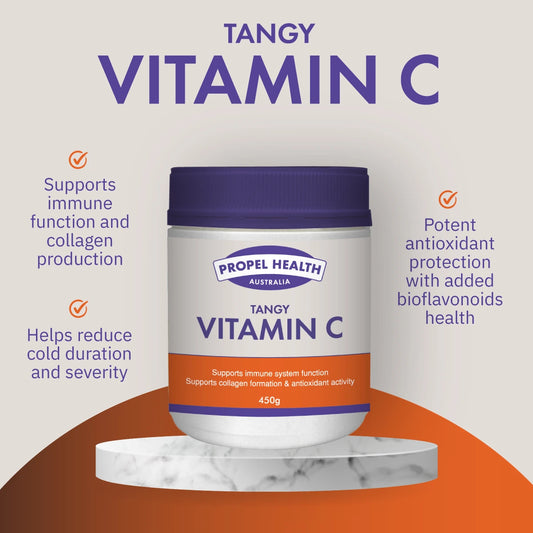
At Propel Health Australia, we've combined hesperidin with vitamin C in Tangy Vitamin C.
There's a simple reason.
Vitamin C and hesperidin naturally occur alongside one another in citrus fruit, but they are distinct compounds with different physiological roles.
Tangy Vitamin C combines high-dose vitamin C with hesperidin, zinc and buffered minerals in an easy-to-take citrus drink.
Hesperidin Benefits FAQ
What are the main hesperidin benefits?
Research suggests potential hesperidin benefits include supporting healthy blood vessel function, circulation, blood pressure, antioxidant defences and inflammatory balance.
What foods contain hesperidin?
Hesperidin occurs naturally in citrus fruits, particularly oranges and mandarins. It is also found in lemons and grapefruit.
Is hesperidin vitamin C?
No.
Vitamin C is an essential vitamin, while hesperidin is a citrus flavonoid.
They naturally occur together in citrus fruits and may provide complementary nutritional effects.
Does hesperidin reduce inflammation?
A 2026 meta-analysis of 10 randomised controlled trials reported significant reductions in CRP and TNF-α following hesperidin supplementation.
This suggests hesperidin may help support inflammatory balance, although it should not be considered a treatment for inflammatory disease.
What are hesperidin benefits for blood pressure?
Clinical research suggests hesperidin may support healthy blood pressure and endothelial function.
Its potential effects on the ability of blood vessels to relax and dilate are one possible explanation for these findings.
Hesperidin Benefits: The Take-Home Message
Vitamin C gets most of the attention when we talk about oranges.
But hesperidin deserves some attention too.
Human research suggests hesperidin benefits may include supporting healthy blood pressure, circulation, endothelial function, antioxidant defences and inflammatory balance.
And because hesperidin naturally occurs alongside vitamin C in citrus fruit, combining the two provides an interesting way to reproduce more of the nutritional complexity of citrus than vitamin C alone.
Try Tangy Vitamin C with Hesperidin

About the Author
Grant Jenkins is the founder of Propel Health Australia and a former high-performance coach with more than 25 years of experience in exercise physiology, nutrition and health education. He combines emerging scientific research with practical experience to help Australians make informed decisions about evidence-based supplementation and healthy ageing.
Disclaimer
This article is for educational purposes only and is not intended to diagnose, treat, cure or prevent any disease. Always consult your healthcare professional before starting a new supplement, particularly if you have an existing medical condition or take prescription medication.