Behaviour: Not Just Nature vs Nurture?
Tim and Randy are both athletes.
If you had to plot risk tolerance on a bell-curve, Tim would be on the extreme left.
And Randy would be on the extreme right.
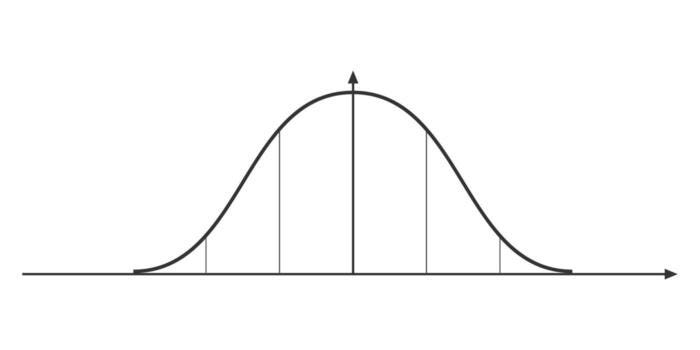
Their nicknames were Timid Tim and Reckless Randy.
You can picture what each would do in every contest.
For example, instead of following up a great shot to the net, Tim would stay on the baseline.
With an open goal in front of him, Tim would still pass to a teammate.
Randy, on the other hand, would go for a tweener when a lob would suffice.
And when the situation calls for a simple pass, he’d try something extravagant.
You’ve tried every coaching tactic possible to change their behaviours - constraints-based feedback, punishments, drills, rewards, games, sessions on the couch…
Frustrated with the two of them, you stumble across this revolutionary 2011 study (linked below).
And you book an appointment with your local Gastroenterologist.
Having read the same study, the Gastro knows exactly what to do.
He swaps their gut microbiota.
Tim receives Randy’s. Randy receives Tim’s.
Within a few days you notice a difference: Tim takes some calculated risks… And Randy isn’t as reckless.
Simply, both athletes have regressed towards the mean on the risk tolerance bell-curve.
You haven’t changed their DNA (nature). And you haven’t changed your coaching (nurture).
All that was change was their gut microbiota.
There’s a study showing that swapping gut bacteria changes a person’s behaviour?
No.
Not people, mice.
But the researchers didn’t simply compare one group of mice with another.
They used two different experimental models and both pointed to the same conclusion.
First, they altered the gut microbiota of healthy mice and observed changes in exploratory behaviour and brain chemistry.
Then they transferred gut microbiota from one strain of germ-free mice into another strain with a different behavioural profile.
The result?
The recipient mice began behaving more like the donor mice.
We both know no study is perfect.
And of course we should be careful about extrapolating mouse data to humans.
But this is one of the first studies that made researchers stop and think:
Could the bacteria living in our gut influence the way we think and behave?
So what do we do with a study like this?
Let’s not start swapping athletes’ gut microbiota.
But we also don’t dismiss it because it was performed in mice.
Instead, we let it challenge the way we think.
We’ve gone from Nature v Nurture… to Nature & Nurture… Perhaps it’s time to progress to:
Nature & Nurture & Microbiome
(or Nature & Nurture & Nutrition?)
Take Home Message
Back in my exercise physiology classes in the 90s, the gut was considered little more than a digestive tube.
Today, we know it communicates with the immune system, the endocrine system and the brain.
We’ve moved from:
“Does the gut influence the brain?”
To:
“What extent?”
Am I suggesting we send Timid Tim and Reckless Randy to a Gastroenterologist?
Probably not (well, not yet!).
But it is time we pay more attention to the ecosystem living inside our athletes.
Twenty years ago, we coached Nature and Nurture.
The next frontier might be the Microbiome.
NOTE 1: To read more about the study reference about click here: Gut Health Axis.
NOTE 2: Improve your own microbiome by feeding your Bifidobacterium and Faecalibacterium.
Use discount code: guthealth15 for 15% off all our Gut Health Supplements.
About the Author
Grant Jenkins is the founder of Propel Health Australia and a physiologist with more than 25 years of experience working with elite and developing athletes. Throughout his career, he has been fascinated by the intersection of performance, nutrition and human physiology. His writing translates emerging scientific research into practical insights, helping coaches, athletes and everyday Australians better understand the role nutrition and the gut microbiome may play in health, performance and healthy ageing.
Disclaimer
This article is intended for educational purposes only and discusses findings from scientific research. The featured study was conducted in mice and should not be interpreted as evidence that the same effects occur in humans. It is not intended to diagnose, treat, cure or prevent any disease. Always consult your healthcare practitioner before making changes to your diet, supplementation or healthcare routine.