PHGG vs Metamucil: Which Fibre Is Better for Your Gut?
TL;DR Both PHGG and Metamucil can support bowel regularity, but they work differently. For people with IBS, bloating, or sensitive digestion, PHGG is often the better-tolerated option.
If you've been researching fibre supplements, you've probably come across two popular options:
- PHGG (Partially Hydrolysed Guar Gum)
- Metamucil (Psyllium Husk)
Both are fibres.
Both are used to support digestive health.
Both may help improve bowel regularity.
But they work quite differently.
Understanding those differences can help you choose the right option for your goals, whether that's relieving constipation, supporting your microbiome, managing IBS symptoms, or simply improving your overall gut health.
What Is PHGG?
PHGG stands for Partially Hydrolysed Guar Gum.
It is produced from guar beans and then partially broken down through a specialised process that creates a highly soluble, easy-to-tolerate fibre.
Unlike many traditional fibres, PHGG:
- dissolves completely in liquids
- has virtually no taste
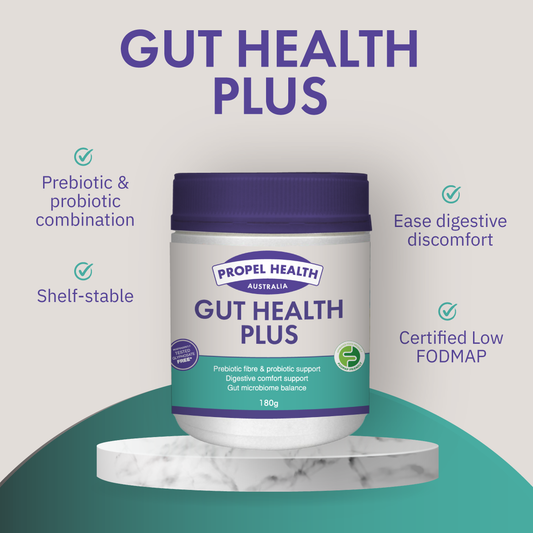
- is low FODMAP certified
- acts as a prebiotic
- is generally well tolerated even by sensitive digestive systems
PHGG has attracted significant interest from gastroenterologists and dietitians because of its ability to support beneficial gut bacteria while remaining gentle on the digestive tract.
What Is Metamucil?
Metamucil contains psyllium husk, a soluble fibre derived from the seeds of Plantago ovata.
Psyllium works differently from PHGG.
When mixed with water, it forms a thick gel that:
- increases stool bulk
- absorbs water
- supports bowel regularity
- adds bulk to the stool
Metamucil has been used for decades and remains one of the most recognised fibre supplements in Australia.
PHGG vs Metamucil: The Biggest Difference
The biggest difference is:
Metamucil primarily works as a bulking fibre.
PHGG primarily works as a prebiotic fibre.
Both can support bowel health.
But PHGG offers an additional benefit:
PHGG feeds beneficial your gut bacteria.
This distinction is important when discussing:
- IBS
- bloating
- gut microbiome health
- long-term digestive function
PHGG v Metamucil: Which Is Better for IBS?
For many people, this is the most important question.
IBS sufferers often struggle with:
- bloating
- abdominal discomfort
- constipation
- diarrhoea
- irregular bowel habits
Traditional fibres sometimes make symptoms worse.
Because psyllium absorbs water and expands significantly, you may experience:
- bloating
- fullness
- increased gas
PHGG is often recommended because it is:
- low FODMAP
- gentle on the digestive tract
- less likely to cause excessive bloating
- effective for both constipation-predominant and diarrhoea-predominant IBS
Several clinical studies have investigated PHGG specifically in IBS populations with encouraging results.
For this reason, many practitioners consider PHGG one of the most versatile fibre options available for sensitive digestive systems.
PHGG v Metamucil: Which Is Better for Constipation?
Both fibres can help constipation.
Metamucil helps by:
- increasing stool bulk
- drawing water into stool
- stimulating bowel movements
PHGG helps by:
- supporting beneficial bacteria
- improving stool consistency
- increasing stool frequency
- supporting overall bowel function
For simple constipation, both may be effective.
The choice often comes down to tolerance.
People who dislike thick drinks often prefer PHGG because it dissolves completely and does not form a gel.
What to Take for Chronic Constipation
For chronic constipation, increasing soluble fibre is often one of the first nutritional strategies considered.
Psyllium increases stool bulk and retains water, while PHGG may help by:
- improving stool consistency
- increasing bowel movement frequency
- supporting beneficial gut bacteria
- providing gentle prebiotic fibre
For people who experience constipation alongside IBS, bloating or digestive sensitivity, PHGG can be particularly useful because it is low FODMAP, dissolves completely and is generally well tolerated.
Whichever fibre you choose, increase intake gradually and drink adequate fluids.
Persistent or unexplained chronic constipation should be assessed by a healthcare practitioner, particularly if accompanied by pain, bleeding, unexplained weight loss or a significant change in bowel habits.
PHGG v Metamucil: Which Is Better for Diarrhoea?
Many people are surprised to learn that fibre can help diarrhoea.
Both PHGG and psyllium can improve stool consistency.
However, PHGG has shown particular promise because of its ability to support the microbiome and improve stool quality without creating excessive bulk.
This makes it useful for people who experience alternating constipation and diarrhoea.
Which Is Better for Bloating?
This is where PHGG often shines.
Many fibre supplements increase gas production rapidly.
PHGG tends to be better tolerated because it ferments more gradually.
People frequently report:
- less bloating
- less discomfort
- easier dose increases
This makes PHGG particularly attractive for individuals who have previously given up on fibre supplements because of digestive side effects.
Gut Microbiome Benefits
This is where the gap widens considerably.
Metamucil provides fibre.
PHGG provides fibre and prebiotic activity.
A prebiotic is a substance that selectively feeds beneficial bacteria in the gut.
These bacteria play important roles in:
- digestion
- immune function
- gut barrier integrity
- short-chain fatty acid production
- overall microbiome diversity
As research into the gut microbiome continues to expand, many people are moving beyond simply increasing fibre intake and focusing on feeding the right bacteria.
PHGG fits naturally into this strategy.
Ease of Use
Another practical difference is convenience.
Metamucil
- thickens rapidly
- requires prompt consumption
- noticeable texture
- noticeable mouthfeel
PHGG
- dissolves completely
- virtually tasteless
- mixes into water, coffee, smoothies, yoghurt, or food
- no thickening
For many people, this makes daily compliance significantly easier.
After all, the best supplement is the one you actually take consistently.
Which Fibre Is Better for Long-Term Gut Health?
If your primary goal is:
- occasional constipation relief
- increasing stool bulk
- supporting regular bowel movements
Metamucil can be an effective option.
However, if your goal is:
- microbiome support
- IBS management
- digestive comfort
- reducing bloating
- long-term gut health
PHGG offers advantages that go beyond traditional fibre supplementation.
Its combination of:
- excellent tolerance
- low FODMAP status
- prebiotic activity
- digestive versatility
has made it increasingly popular among health practitioners and consumers alike.
PHGG vs Metamucil: The Verdict
There is no single "best" fibre for everyone.
Metamucil remains a useful fibre supplement for bowel regularity and stool bulking.
However, PHGG offers something more comprehensive.
Because it acts as both a fibre and a prebiotic, it supports not only bowel movements but also the beneficial bacteria that help maintain long-term digestive health.
For people dealing with:
- IBS
- bloating
- digestive sensitivity
- microbiome health
PHGG is often the preferred choice.
Choose Independently Tested Supplements
Plant-based supplements are only as good as the ingredients they contain.
Because glyphosate is widely used in modern agriculture, trace residues have been detected in a variety of crops and foods.
For many people, independent testing provides an extra level of confidence that a supplement is as clean as possible.
When choosing plant-based supplements, look for brands that are transparent about contaminant testing, not just active ingredients, so your supplement supports your health without unnecessary exposure to unwanted residues.
Final Thoughts
The conversation around fibre is changing.
It is no longer just about how often you go to the bathroom.
Researchers are increasingly recognising the importance of the gut microbiome and the role specific fibres play in supporting it.
Both Metamucil and PHGG have their place.
But if you're looking for a gentle, low-FODMAP fibre that supports both digestive function and beneficial gut bacteria, PHGG is worth serious consideration.
Where to Buy PHGG in Australia?

About the Author
Grant Jenkins is the founder of Propel Health Australia and a high-performance coach and physiologist with over 25 years' experience working with elite and developing athletes. He formulates evidence-based supplements designed to support gut health, performance, recovery, and long-term wellbeing.
Disclaimer
Propel Health offers this article for education purposes only. Please consult your Health Practitioner for personalised and specific information.
Making the switch? Here is how to take PHGG, including dosage and how long it takes to work.
Metamucil is psyllium based, so it is worth reading the benefits of psyllium husk powder on its own.